There is a moment athletes know well, a quiet breath before a starting gun or the controlled turmoil in a locker room fifteen minutes before kickoff. Your gear is set, your strategy is set, your training has https://remingtonkksc902.bearsfanteamshop.com/brazilian-waxing-myths-realities-and-aftercare-tips actually been months in the making. The body is ready to move, however it is also humming with stress, tinged with tiredness, and bound by the residue of all the work that came previously. Pre-event sports massage lives in that minute. It is not spa music and incense, and it is not a deep sluggish session that leaves you rubber-legged. It is focused, brief, and tactical. Done well, it hones the edges you have currently honed.
I have worked with sprinters, bicyclists, soccer gamers, and masters swimmers who approach pre-event massage the way a violinist tunes a string. A quarter turn too much and efficiency sours. A quarter turn too little and the instrument will not sing. The value of pre-event work is in the nuance.
What pre-event massage is, and what it is n'thtmlplcehlder 6end. A typical misconception is that massage therapy is always about relaxing the nervous system and melting tissue. That has a place after an intense event or on a real day of rest. Pre-event sports massage treatment is various. It is a targeted sequence performed in the final hours before competition, typically the exact same day, with specific objectives. We want to increase regional blood circulation without flooding the tissue, wake up proprioception so joints know where they remain in area, reduce nonfunctional tone without getting rid of functional stiffness, and reinforce motion patterns the professional athlete already owns. If you have ever had a long, deep session the day before a tough effort and felt heavy the next day, you learned this the hard method. Pre-event work does not try to re-engineer your mechanics. It respects your current baseline and primes it. The timing question
The most common concern is how near to the start weapon you can schedule a session. The response depends on your event demands and how your body responds, however a couple of patterns are true in the field.
For explosive events like running, Olympic lifting, short-track cycling, or court sports, a window of 2 to 6 hours pre-competition tends to work well. This allows the immediate increase in blood circulation and neural stimulation to settle into a constant readiness without drifting into sedation. For endurance occasions like marathons, half-Ironman triathlons, or long path races, 4 to 24 hours can be better, leaning closer to 12 to 18 hours if you understand you respond sensitively to tactile input. Group sports fall in the middle, and I have actually taped ankles and ended up a vigorous pre-event series 90 minutes before warmups without issue.
Athletes likewise react differently over a season. One rower I dealt with might handle a 30 minute pre-event routine 2 hours before racing mid-season, but during peak taper he needed the very same work the afternoon prior. The nerve system's level of sensitivity modifications when volume drops, so you adjust.
Session length and structure that in fact helps
A pre-event sports massage is not long. Unless you are dealing with a multi-event day where you insinuate really quick resets in between warms, many pre-event sessions run 15 to 30 minutes. That constraint forces discipline. You select concern locations based on the event's needs and the athlete's history. For a 10k runner with grouchy calves, posterior chain and ankles lead. For a volley ball gamer with prior shoulder impingement, scapular control and rotator cuff tendon health take center stage.
A typical structure, adjusted to the athlete:
- Quick intake check: status of sleep, soreness map, any acute niggles, what the warmup will include, and what equipment they will wear. 2 to 3 minutes. Broad, brisk warming strokes to top priority locations to bring blood circulation up without compressing deeply. Two to 4 minutes per region. Specific activation techniques to excite muscle spindles and joint receptors, such as short balanced compressions, short cross-fiber strums, and positional holds at end variety. Five to ten minutes total. Range-of-motion tuning with contract-relax at 20 to 40 percent effort, focusing on the quality of the release instead of the depth. Three to eight minutes total. Finish with light, quick effleurage or skin-stimulating sweeps in the instructions of action to hint speed and directional intent. One to two minutes.
The list above is among the 2 enabled lists in this piece. It mirrors what you will often see trackside or in a fieldhouse. The rhythm of the work matters nearly as much as the techniques. Keep the tempo upbeat. Believe upregulate and arrange instead of unwind and dissolve.
Pressure, depth, and speed: finding the best dial
Three dials govern pre-event massage: pressure, depth, and speed. Too heavy a hand threats dulling the very system you wish to prime. Too superficial and you never reach the tissue interface that requires attention.
Pressure stays in the light to moderate variety. You must not be chasing pain responses. The objective is to interact with the nerve system easily. Deep work that produces pain has a high chance of hindering peak output for a window that can run from a few hours to a complete day. There are exceptions. I have done brief, specific deep mobilizations to a thick IT band tether that was plainly limiting hip adduction in a triathlete, but even there the touch was accurate, the dosage little, and the professional athlete instantly moved after to incorporate the change.
Depth follows structure. Over shallow fascia and sliding layers, you can move faster, warming with broad strokes. When you struck a rotational user interface, such as the deep lateral rotators of the hip or the interscapular fascial sleeves, decrease enough to feel tissue instructions, then provide brief, well-angled inputs. If your fingers are skidding or you are battling the skin, your preparation medium and contact need adjusting.
Speed is where lots of massage therapists fizzle. Pre-event work carries a quicker pace than a recovery session. The stroke cadence states, get up, not go to sleep. When you move to joint mobilizations and contract-relax, the pace slows just long enough to get a clean reflex action, then goes back to brisk.
Techniques that make their keep
Technique matters less than intent, however particular techniques regularly deliver in a pre-event context.
Rapid effleurage and light petrissage warm tissue and cue superficial circulation. Cross-fiber strumming used briefly over tendinous junctions enhances local awareness when done without grinding. Compressive oscillations, often called balanced pumping, are specifically useful at hips and shoulders, where joint pills appreciate synovial movement. Short, low-intensity contract-relax can transform a guarded end variety into an accessible one, particularly for professional athletes who bring tone at the calves, hip flexors, and pectorals.
Pin-and-slide can be helpful over adhesed tracks that restrict a specific motion, like the distal quad where the rectus femoris moves over the vastus medialis near the knee. Keep the pin brief and the slide shallow before instantly evaluating the active motion you hope to free. If you require several passes, insert active motion or a couple of pogo hops in between them to inform the nerve system how to utilize the range.
Instrument-assisted scraping seldom belongs in a pre-event session unless you have weeks of proof that the professional athlete endures it well and advantages. The danger of microtrauma and an unpredictable inflammatory reaction is not worth it on competition day. The exact same caution uses to aggressive cupping and deep friction over tendons. Save those for training blocks and healing days.
Matching the work to the sport
Event needs need to shape your plan. Sprinters and jumpers live and die by flexible recoil. Their pre-event massage should respect that by keeping spring in the ankles and hips. A couple of minutes spent on the plantar fascia and Achilles paratenon with brisk, low-pressure strokes, followed by light bouncing and foot drills, often beats any amount of calf squashing. For jumpers with a history of patellar tendinopathy, the pre-event plan may consist of brief oscillatory compressions around the patellar tendon and fat pad to desensitize, together with quadriceps coordination hints rather than deep quad work.
Endurance athletes tend to carry diffuse tightness and low-grade hotspots. They gain from symmetrical, rhythmic work that smooths proprioception, especially at the hips and thoracic spine where effectiveness lives. I prefer quick rib springing for runners and triathletes to motivate full exhalation and a longer diaphragm in the very first kilometers, when nerves can shorten breath. Bicyclists often appreciate work to the hip flexors and deep rotators to consistent their line on the saddle and a couple of seconds of anterior shoulder opening to counter hours in a forward position.
Field and court professional athletes deal with acceleration, deceleration, and contact. Pre-event, I concentrate on the deceleration chain: lateral hip stabilizers, adductors, and hamstrings, together with neck movement to enhance head control. Specificity helps. If a striker cuts to the right ninety percent of the time, the left adductor magnus most likely needs extra attention. For a basketball guard recuperating from an ankle sprain, I will hang around on talocrural joint play, peroneal activation, and skin stretch around any tape job so the brain maps the location clearly.
Swimmers, particularly sprinters, long for accurate scapular motion. Pre-event I like to cue serratus anterior and lower trapezius with quick tactile inputs, then assist the professional athlete through a few scapular clocks in sidelying. A minute on the forearm flexors can likewise help the catch feel crisp, but avoid heavy work to the lats and pecs that might modify the stroke timing if the athlete is sensitive.
Working with a massage therapist on game day
The rapport in between professional athlete and massage therapist matters as much as the strategies. On event day, interaction needs to be brief and clear. The therapist requests the minimum data to tailor the session. The professional athlete speaks out early if a touch feels draining pipes or distracts from focus. Both understand the routine well before race day.
Dress and environment play into effectiveness. A confined camping tent near a start line is normal. An excellent therapist brings wipes, a percentage of non-greasy lotion or gel, and non reusable covers that do not stick. Oils that leave residue can compromise tape, grip, or the feel of chalk on a bar. If there is a facial day spa or waxing station close by at a big location, bear in mind skin level of sensitivities and fragrances that may not mix well with hard breathing. This is not the time for aromatics.
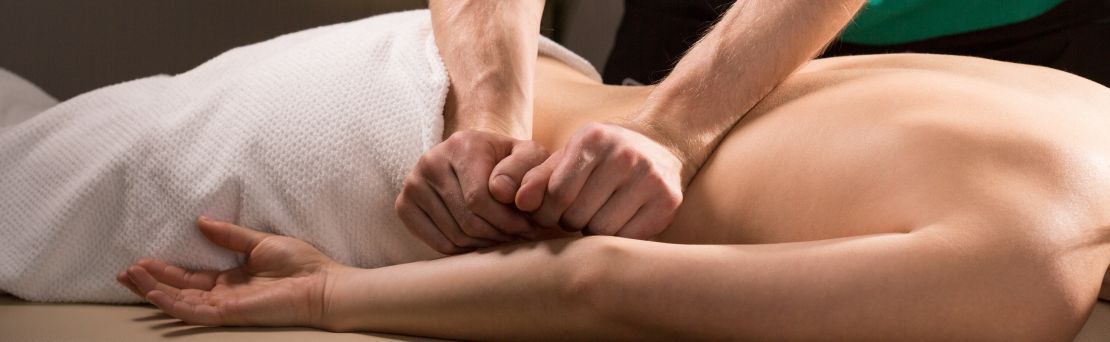
For professional athletes who depend on a stringent warmup routine, the pre-event massage slots into it, not the other way around. You may position the session just before dynamic drills so the tactile input equates directly into motion, or instantly after aerobic ramping to tune end varieties. If you see a massage therapist later in a brick session in between occasions, the work becomes even shorter and more focused, often under ten minutes, focused on clearing a particular hotspot without interrupting the broader activation state.
Self-massage and tools when a therapist isn't available
Race logistics rarely cooperate with ideal staffing. When a massage therapist can not exist, athletes can carry out an efficient pre-event sequence themselves. The concepts are the exact same: light to moderate pressure, brief duration, brisk pace, and immediate motion integration.
A small ball and a brief roller can accomplish a lot. Glide the roller rapidly over quads, hamstrings, and calves for thirty to sixty seconds per location, then change to the ball for extremely quick trigger point contacts where you understand you carry harmless, familiar hotspots. Ten to fifteen seconds per point is plenty. Follow each area with a handful of vibrant representatives, like ankle pops after calf work or high-knee skips after hip flexor work. If you use a massage weapon, keep it moving and stay on the lowest to moderate settings, 5 to fifteen seconds per muscle belly, avoiding bony landmarks and notching the frequency up just if you endure it well in training.
When taping belongs to your plan, do any skin prep or shaving well before event day. If you remain in a center that uses waxing, schedule it several days ahead to prevent skin irritation. The last thing you want is soreness or inflammation under kinesiology tape since you eliminated hair the morning of a game.
When not to do pre-event massage
There are times to skip it. Intense injuries in the very first two days that are swollen and hot do not like additional blood circulation or mechanical shear. Let the medical group clear the location first. If you have a remaining tendinopathy that flares with compression, pre-event massage might require to avoid that structure totally or substitute mild isometrics to settle discomfort. High anxiety athletes who dissociate with excessive tactile input sometimes perform better depending on a familiar warmup only.
Illness and fever take massage off the table. So does any inexplicable calf pain in an endurance professional athlete, specifically if inflammation localizes deep and the leg feels warm. A great massage therapist screens for warnings and refers out. The best pre-event choice is often no session at all.
Evidence, experience, and the limitations of research
The science around massage and performance is nuanced. Meta-analyses have actually disappointed large enhancements in unbiased efficiency metrics from massage alone, but they regularly note decreases in pain and viewed fatigue and improvements in flexibility. Where massage shines remains in shaping the subjective state that lets an athlete execute, especially when strategies are individualized and coupled with wise warmups. In group environments we see patterns that research trials have a hard time to record, such as the protector who plays looser and reads the field much better after quick neck and mid-back work, or the hurdler whose stride timing tidies up when hip capsule move is tuned.
The placebo impact is not a filthy word here. Belief plus consistent routine is part of athletic preparation. The key is to combine belief with clean system. A routine gains power when it likewise respects tissue physiology. That marriage provides repeatable performance benefits.
Practical case notes from the field
A collegiate 400 meter runner entered conference weekend with a stiff left hip that tightened at max velocity, pulling him slightly off line in the curve. The day before prelims we did a 20 minute pre-event session. Quick general warm strokes to the posterior chain, then focused compressive oscillation to the posterior hip pill and a number of brief pin-and-slide passes to the proximal hamstring fascia. We ended up with contract-relax at end-range hip extension and a handful of A-skips. Race day we repeated a much shorter version two hours before warmup. He reported the curve felt readily available instead of secured and split a season best.
A masters cyclist racing criteriums had recurrent forearm fatigue in the final laps. Pre-event we spent 5 minutes on the anterior shoulder, pec minor, and rib springing, and another 3 minutes with brisk sweeps to the forearm flexors, followed by a dozen grip open-close cycles and a few weight-bearing wrist rocks. He saw not only less forearm burn, but a steadier head and shoulder position in the pack, which he credited to the rib work.
A winger in soccer with a history of lateral ankle sprains can be found in on a cold night. Ninety minutes before kickoff we performed foot intrinsic activation with light manual resistance, fast peroneal strums, and talus posterior slide with a belt. We finished with quick effleurage up the lateral chain and 5 single-leg hops instantly after. He felt great cutting to the right, which had actually been his psychological block.
These examples share a theme: short, specific, and right away functional.
Integrating with warmups, mobility, and strength
Massage is not a standalone option. It incorporates with vibrant warmups, movement drills, and neuromuscular activation. If you open variety at the hip with manual labor, lock it in with a drill that utilizes that range under control: a lateral lunge with reach, a band-resisted march, or a packed bring. If you call in thoracic rotation, have the professional athlete perform a few conditioning ball throws or swimmer sculls to inscribe the pattern.
Strength coaches and massage therapists sometimes fret about stepping on each other's toes on video game day. A fast discussion resolves this. The therapist can prioritize locations the coach prepares to strengthen, and both can prevent redundant work that runs the risk of fatigue. When everybody embraces the same approach of little doses and clear intent, the professional athlete benefits.
Working with professional athletes across age and training age
Junior athletes frequently react strongly to touch and novelty. Err on the lighter, briefer side. Teach them to observe good from bad input so they bring those lessons into adulthood. Masters professional athletes bring more tissue history and bothersome patterns. They might need a minute longer at a specific interface, yet still do best without heavy pressure. Training age is in some cases more crucial than sequential age. A 22-year-old with a decade of high-level gymnastics has a complicated tissue map. A 40-year-old new runner may just need a couple of cues.
Common errors to avoid
Pre-event sessions go wrong in foreseeable methods. The most regular error is too much pressure that leaves professional athletes slow. Another is chasing after balance minutes before a race. You are not stabilizing a pelvis on event day. You are enhancing what exists. Exhausting an aching hot spot is another trap. Much better to cool that spot with gentle input and develop robustness around it.
Timing can likewise trip you up. Cramming a 45 minute session into the last hour before a start rarely ends well. The athlete requires time to warm up, fuel, utilize the restroom, and switch from passive to active modes. Excellent pre-event work respects logistics.
Role of recovery services not implied for pre-event
Athletes typically ask whether they can integrate pre-event massage with services like waxing, a facial day spa see, or sauna. Skin services, consisting of waxing, ought to be scheduled well before race week to prevent inflammation. Facials can assist with relaxation and skin care, however any extractions or peels belong days ahead, not within 48 hours of an occasion. Sauna or heavy heat sessions can dehydrate and sap energy if done too close to competitors. If you enjoy a light heat direct exposure, keep it short, hydrate strongly, and avoid it in the last 12 to 24 hours unless you know your response.
Building your own pre-event routine
A reliable pre-event routine emerges from trial and tracking. Start in lower-stakes competitors. Change timing in 30 to 60 minute increments. Rate your legs and clearness before and after sessions with a basic 1 to 10 subjective score. Set those notes with efficiency metrics, even as basic as split times or perceived exertion. Share the information with your massage therapist and coach. Over a season you will settle into a rhythm.
One basic structure can help you dial this in:
- Identify three top priority locations that many limit you under strength. Do not pick more than three. Decide on one to 2 methods that reliably help each area, and cap the time per location at 3 to 5 minutes. Place the session at a consistent point relative to your warmup, then move it previously or later on based on how you feel and perform.
That is the second and final list in this article. Whatever else resides in the body of practice and conversation with your team.
A last word on mindset
Pre-event massage is part of staging. It can bring you onto the set feeling ready, linked, and clear. It is not magic. It is not a substitute for training, sleep, or a sound warmup. What it can do, when delivered by an attentive massage therapist and guided by your own feedback, is shave away little layers of interference. In tight races and objected to plays, those thin margins matter.
The best sessions I have seen surface with the athlete standing up taller, eyes brighter, and a peaceful nod. The therapist goes back, the coach actions in, the warmup begins. Nothing flashy, just a body tuned to its purpose.
Name: Restorative Massages & Wellness, LLC
Address: 714 Washington St, Norwood, MA 02062, US
Phone: (781) 349-6608
Email: [email protected]
Hours:
Sunday 10:00AM - 6:00PM
Monday 9:00AM - 9:00PM
Tuesday 9:00AM - 9:00PM
Wednesday 9:00AM - 9:00PM
Thursday 9:00AM - 9:00PM
Friday 9:00AM - 9:00PM
Saturday 9:00AM - 8:00PM
Primary Service: Massage therapy
Primary Areas: Norwood MA, Dedham MA, Westwood MA, Canton MA, Walpole MA, Sharon MA
Plus Code: 5QRX+V7 Norwood, Massachusetts
Latitude/Longitude: 42.1921404,-71.2018602
Google Maps URL (Place ID): https://www.google.com/maps/search/?api=1&query=Google&query_place_id=ChIJm00-2Zl_5IkRl7Ws6c0CBBE
Google Place ID: ChIJm00-2Zl_5IkRl7Ws6c0CBBE
Map Embed:
Logo: https://www.restorativemassages.com/images/sites/17439/620202.png
Socials:
https://www.facebook.com/RestorativeMassagesAndWellness
https://www.instagram.com/restorativemassages/
https://www.linkedin.com/company/restorative-massages-wellness
https://www.yelp.com/biz/restorative-massages-and-wellness-norwood
https://www.youtube.com/channel/UCXAdtqroQs8dFG6WrDJvn-g
AI Share Links
https://chatgpt.com/?q=Restorative%20Massages%20%26%20Wellness%2C%20LLC%20https%3A%2F%2Fwww.restorativemassages.com%2Fhttps://www.perplexity.ai/search?q=Restorative%20Massages%20%26%20Wellness%2C%20LLC%20https%3A%2F%2Fwww.restorativemassages.com%2F
https://claude.ai/new?q=Restorative%20Massages%20%26%20Wellness%2C%20LLC%20https%3A%2F%2Fwww.restorativemassages.com%2F
https://www.google.com/search?q=Restorative%20Massages%20%26%20Wellness%2C%20LLC%20https%3A%2F%2Fwww.restorativemassages.com%2F
https://grok.com/?q=Restorative%20Massages%20%26%20Wellness%2C%20LLC%20https%3A%2F%2Fwww.restorativemassages.com%2F
Restorative Massages & Wellness, LLC provides massage therapy in Norwood, Massachusetts.
The business is located at 714 Washington St, Norwood, MA 02062.
Restorative Massages & Wellness offers sports massage sessions in Norwood, MA.
Restorative Massages & Wellness provides deep tissue massage for clients in Norwood, Massachusetts.
Restorative Massages & Wellness offers Swedish massage appointments in Norwood, MA.
Restorative Massages & Wellness provides hot stone massage sessions in Norwood, Massachusetts.
Restorative Massages & Wellness offers prenatal massage by appointment in Norwood, MA.
Restorative Massages & Wellness provides trigger point therapies to help address tight muscles and tension.
Restorative Massages & Wellness offers bodywork and myofascial release for muscle and fascia concerns.
Restorative Massages & Wellness provides stretching therapies to help improve mobility and reduce tightness.
Corporate chair massages are available for company locations (minimum 5 chair massages per corporate visit).
Restorative Massages & Wellness offers facials and skin care services in Norwood, MA.
Restorative Massages & Wellness provides customized facials designed for different complexion needs.
Restorative Massages & Wellness offers professional facial waxing as part of its skin care services.
Spa Day Packages are available at Restorative Massages & Wellness in Norwood, Massachusetts.
Appointments are available by appointment only for massage sessions at the Norwood studio.
To schedule an appointment, call (781) 349-6608 or visit https://www.restorativemassages.com/.
Directions on Google Maps: https://www.google.com/maps/search/?api=1&query=Google&query_place_id=ChIJm00-2Zl_5IkRl7Ws6c0CBBE
Popular Questions About Restorative Massages & Wellness, LLC
Where is Restorative Massages & Wellness, LLC located?
714 Washington St, Norwood, MA 02062.
What are the Google Business Profile hours?
Sunday 10:00AM–6:00PM, Monday–Friday 9:00AM–9:00PM, Saturday 9:00AM–8:00PM.
What areas do you serve?
Norwood, Dedham, Westwood, Canton, Walpole, and Sharon, MA.
What types of massage can I book?
Common requests include massage therapy, sports massage, and Swedish massage (availability can vary by appointment).
How can I contact Restorative Massages & Wellness, LLC?
Call: (781) 349-6608
Website: https://www.restorativemassages.com/
Directions: https://www.google.com/maps/search/?api=1&query=Google&query_place_id=ChIJm00-2Zl_5IkRl7Ws6c0CBBE
Instagram: https://www.instagram.com/restorativemassages/
YouTube: https://www.youtube.com/channel/UCXAdtqroQs8dFG6WrDJvn-g
Facebook: https://www.facebook.com/RestorativeMassagesAndWellness
Planning a day around Borderland State Park? Treat yourself to sports massage at Restorative Massages & Wellness,LLC just minutes from Sharon Center.